
Beyond the Scroll: Why Reading and Perception Define the Future of Learning
Reported by Parvin Fiaz, Founding Member, Mangalore Listeners Club
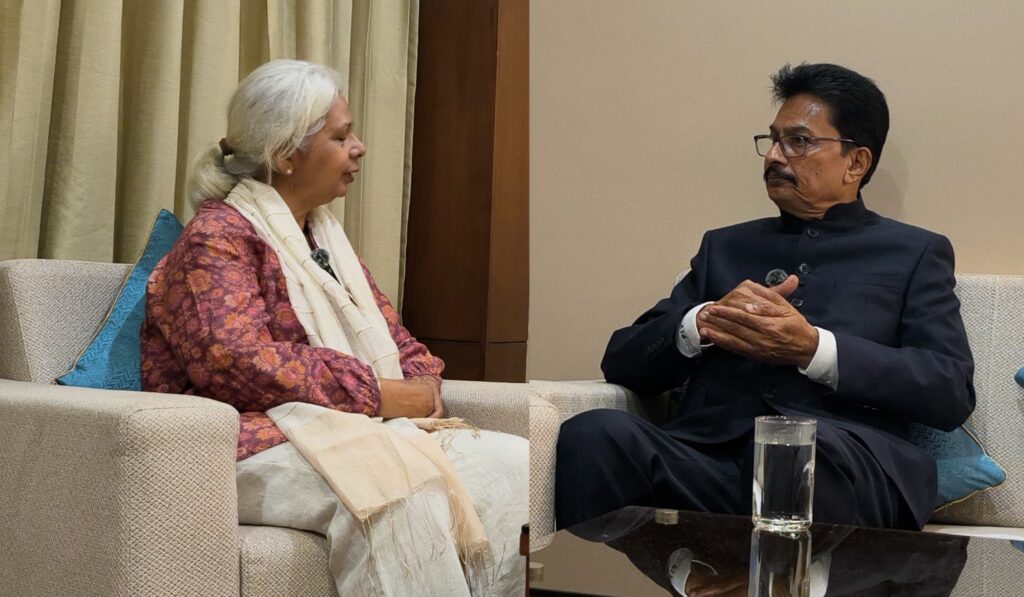
In our fast digital world, many people prefer quick scrolling over deep reading. Through my work with the Mangalore Listeners Club, I have always focused on the value of good listening. Recently, I spoke with Dr. P. S. Yadapadithaya, Former Vice Chancellor of Mangalore University, about a simple truth. A steady habit of reading is what truly sharpens our ability to listen, understand, and grow. During our talk, Dr. Yadapadithaya explained how a generation raised on smartphones can find real depth again. He also shared why teachers need to rethink how they inspire young minds.
The Disciplines of Deep Reading
Young people today often look for quick shortcuts, choosing their phones over newspapers, periodicals, and books. However, Dr. Yadapadithaya noted that real reading is not just scanning words on a page. It is an act of commitment built on two basic habits. The first is sitting discipline, which is the physical ability to stay in one spot for a full hour without getting restless. The second is mental discipline, which is the focus needed to read twenty pages straight without a break. True reading requires a clear intention to understand the spirit and philosophy of the author.
Five Dimensions of Human Transformation
When practiced regularly, reading shapes a person across five key areas. On a physical level, sustained focus trains the body in stillness and endurance. On a mental level, deep reading sharpens concentration and captures the imagination. On an intellectual level, an engaged reader looks beyond the obvious words on the page, challenging old boundaries and connecting new ideas.
Reading also strengthens the social dimension. Shared spaces like book clubs and study circles allow people to discuss ideas and fill gaps in each other’s understanding. Finally, there is the spiritual dimension. Quoting Swami Vivekananda, Dr. Yadapadithaya explained that true spirituality is the science of human excellence. Reading unlocks inner potential, helping us listen to our inner voice and stay aligned with our ethical compass.
Perception Over Reality
One of the most striking points from our conversation was the difference between perception and reality. When we read a book, the mind acts like a mixer, blending the ideas of the author with our own past experiences. What comes to mind right away is our perception. Dr. Yadapadithaya pointed out that while we often treat our perceptions as reality, the two are not always the same. Yet, at the end of the day, perception often carries more weight than reality itself. Unchecked and clashing perceptions are the root cause of many problems in society. By sparking thoughtful reflection, reading helps us connect our past, present, and future, bringing much needed clarity to how we view the world.
Reimagining Education Through Storytelling
How do we build this habit in students who want everything as fast as instant coffee? Dr. Yadapadithaya shared a clear comparison. Schools and colleges are not petrol bunks meant to pump textbook knowledge into the minds of students. As he reminded me, you can lead a horse to water, but you cannot make it drink. To overcome student boredom and doubt, teachers must move away from dry lectures and embrace storytelling. When a teacher shares a compelling story, students experience the lesson directly. This sparks their imagination, which leads to creativity and innovation. Once their curiosity is awake, pointing them toward books lets them explore further at their own pace.
The Teacher as a Role Model
In closing, Dr. Yadapadithaya shared an important message for educators. Much like a prescription from a doctor that a patient trusts without question, the recommendation of a teacher carries immense power. However, students quickly notice when words and actions do not match. A teacher who does not read newspapers or books cannot expect students to do so. Unless educators lead by example and inspire the hearts and minds of their students, they fail to be true teachers.
As our talk came to an end, it was clear that reading and listening belong together. Quoting Mahatma Gandhi, Dr. Yadapadithaya encouraged us to keep our windows and doors open so noble thoughts can enter from all sides, while staying grounded in who we are. In a world full of shortcuts, making time to read deeply remains our best path to lifelong learning.


